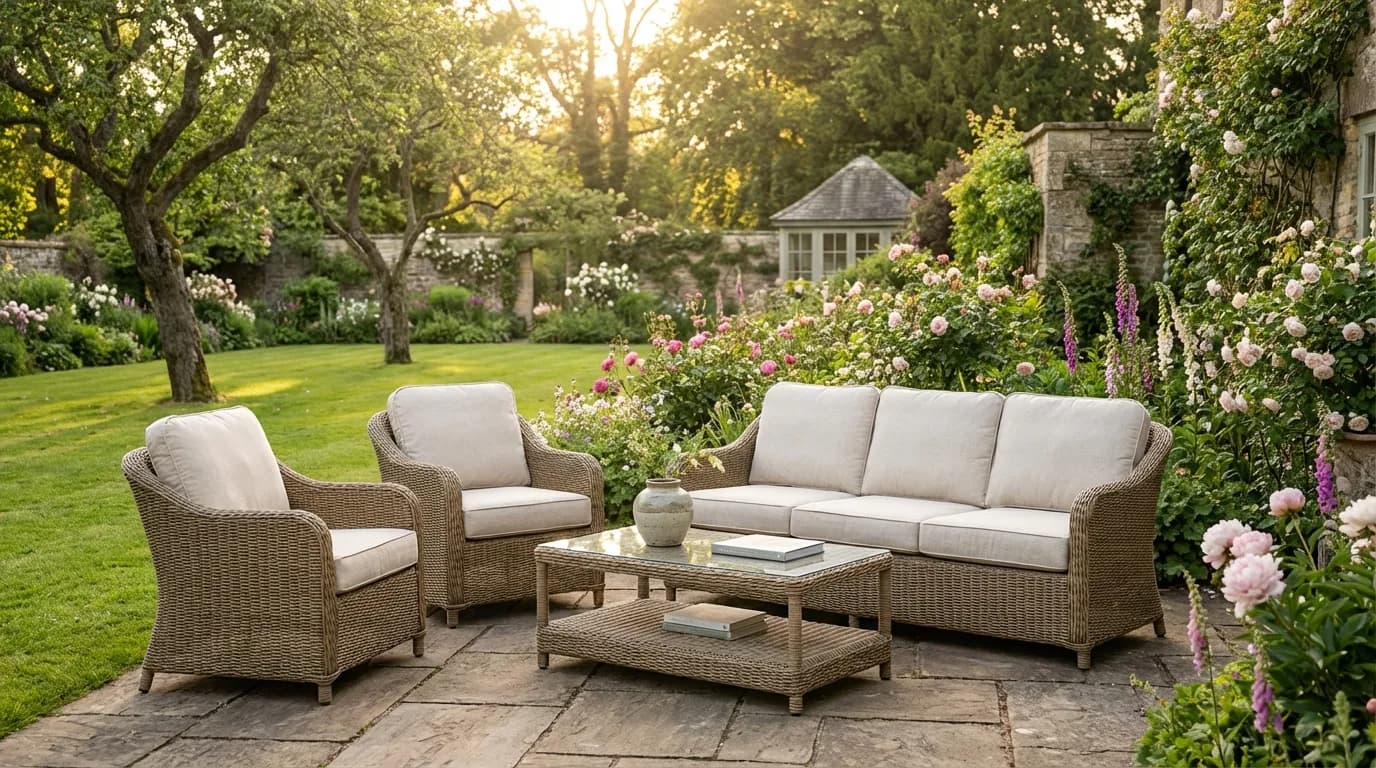
Why Investing in Quality Garden Furniture Matters#
There is a particular kind of regret that hits around June of year two. The rattan is peeling, the cushions smell of mildew despite three washes, and the whole set has faded from "charcoal grey" to a sad, patchy beige. You spent 400 pounds thinking you had saved money. In reality, you bought yourself eighteen months of furniture and a trip to the tip.
Quality garden furniture costs more upfront but repays the difference within three to four seasons. A well-made set on a powder-coated aluminium frame lasts ten to fifteen years outdoors in British weather with minimal maintenance. Spread that cost over a decade and the price-per-summer is lower than replacing a budget set every two years.
There is a comfort argument too. Budget garden chairs tend to be shallow, hard, and sized for the average person in a factory spreadsheet rather than the average person in a garden. Quality sets use ergonomic seat depths, thicker cushion foam (8 cm minimum rather than the 4 cm you get at budget), and frames that flex slightly under load instead of transmitting every fidget through your spine.
Your garden is an extension of your living space for roughly six months of the year in the UK — from April to September, with bonus days either side when the sun co-operates. Furnishing it thoughtfully is not a luxury. It is the same logic as buying a decent sofa for your living room: you will use it almost daily, so it should be comfortable, durable, and worth looking at.
Materials Compared: Rattan vs Wood vs Metal vs Plastic#
Every material has trade-offs. The right choice depends on your climate exposure, maintenance tolerance, and aesthetic preference.
A Note on Rattan#
When retailers say "rattan garden furniture," they almost always mean synthetic PE rattan woven onto a metal frame — not natural rattan palm, which would disintegrate in a single British winter. Synthetic rattan is UV-stabilised, weatherproof, and available in a wide range of weave patterns. The quality difference between sets comes down to the frame material (aluminium is better than steel), the weave density (tighter is more durable), and the cushion specification.
For a full breakdown of rattan types, care routines, and our favourite sets, see our dedicated rattan garden furniture guide.
A Note on Wood#
Teak is the prestige choice because it contains natural oils that resist rot and insect damage without treatment. Left untreated, teak weathers to a silver-grey patina within one to two years — some people prefer this look. If you want to maintain the golden-brown colour, apply teak oil once a year.
Other hardwoods — acacia, eucalyptus, shorea — cost less than teak but need more maintenance. Softwoods like pine are fine for benches under a porch but will not survive a British winter without annual treatment and covering.
Choosing Garden Furniture for Your Space Size#
The most common mistake is buying furniture that is too large for the patio. Outdoor furniture needs more clearance than indoor furniture because people lean back further, stretch legs, and push chairs out on uneven surfaces.
Small Gardens and Balconies (Under 6 Square Metres)#
Stick to a bistro set (two chairs and a round table up to 70 cm diameter) or a compact two-seater sofa with a side table. Folding furniture is ideal for balconies — you can stow it against the wall when not in use and reclaim the floor space.
Avoid corner garden sofa sets on a small balcony. Even the most compact sets measure 200 cm by 150 cm and will leave you with no room to walk around them.
Medium Patios (6-15 Square Metres)#
This is the sweet spot for a four-seater dining set or a compact garden sofa set. A four-seater round table (100-120 cm diameter) needs a paved area of about 3 m by 3 m to allow comfortable chair movement. A garden sofa set with two armchairs and a coffee table fits in a similar footprint.
If your patio is rectangular and narrow, consider a bench-and-table set rather than individual chairs. A bench tucks under the table when not in use, saving 40-60 cm of depth.
Large Gardens (15+ Square Metres)#
You have room for a full outdoor living setup: a corner sofa set for lounging, a separate dining table for eating, and perhaps a firepit or daybed. The key at this scale is creating distinct zones with a clear walkway between them.
Place dining furniture on the hardest, flattest surface (closest to the kitchen door for practicality) and the lounging set further into the garden where it catches the afternoon sun. A 90 cm walkway between zones prevents the garden from feeling cluttered.
Use a garden hose or rope to mark out furniture footprints on the lawn or patio before buying. It takes two minutes, costs nothing, and prevents the sinking feeling of realising your new six-seater set leaves no room for the barbecue.
All-Weather vs Seasonal: What Protection Does Your Set Need?#
The UK throws four seasons at your garden furniture, sometimes in the same week. Understanding which materials can handle what saves you both money and frustration.
Truly All-Weather Materials#
- PE rattan on aluminium frames — Handles rain, frost, UV, and heat without degradation. The weave will not crack in sub-zero temperatures, and aluminium does not rust. This is the most practical all-weather material for the UK.
- Teak — Naturally resistant to rot, insects, and moisture. Thrives outdoors year-round. The only maintenance decision is whether to oil it or let it silver.
- Powder-coated aluminium — Rust-proof, lightweight, and unbothered by temperature swings. Check for chips in the powder coating annually — exposed aluminium does not rust, but it can oxidise and look dull.
Seasonal Materials (Cover or Store in Winter)#
- Steel — Even powder-coated steel can rust if the coating chips. Cover from October to March, and touch up any chips with matching paint immediately.
- Non-teak hardwood — Acacia and eucalyptus need covering or treating before winter. Untreated timber left out in persistent rain will crack, warp, and develop mould within two seasons.
- Cushions and fabric — No outdoor cushion is truly all-weather. Even marine-grade fabrics (Sunbrella, Olefin) benefit from storage during prolonged rain. Foam cores absorb water and take days to dry, creating ideal conditions for mould.
Disposable Materials (Replace Rather Than Protect)#
- Blow-mould resin chairs — These cost so little that covering them is not worth the effort. They crack in frost and fade in UV within two to three years regardless of care.
- Untreated pine — Softwood left outdoors rots within a year or two. Use it for under-cover seating only, or treat it as disposable garden party furniture.
Garden Furniture Covers: Are They Worth It?#
In a word: yes. A 30-pound cover can add three to five years to the life of a 1,000-pound furniture set. That is an exceptional return on investment.
What Makes a Good Cover#
- Material — Look for 600D or 900D polyester with PU (polyurethane) backing. This combination is waterproof, tear-resistant, and blocks UV. Avoid thin polypropylene covers — they tear in wind and degrade in sunlight within a season.
- Fit — A cover should be sized to your specific set, not a generic "large garden furniture" drape. Oversized covers billow in the wind, trap moisture underneath, and blow off in storms. Undersized covers leave exposed areas that collect rainwater.
- Ventilation — Breathable covers with air vents prevent condensation building up underneath, which causes mould and rust. A fully sealed cover traps moisture and can be worse than no cover at all.
- Fastenings — Drawstring hems, toggle clips, or buckle straps keep the cover in place during storms. A cover without fastenings is garden furniture's most expensive kite.
When to Cover#
Cover your furniture at the end of each day from October through March if you are not using it. During summer, cover overnight only if rain is forecast — daily covering in warm weather traps heat and can discolour fabric cushions.
Store cushions separately from the furniture during winter. Stand them upright in a dry shed, garage, or utility room so air circulates around all sides. Stacking cushions flat traps moisture between layers and encourages mildew.
How to Style Your Outdoor Space Like an Interior Designer#
The best outdoor spaces feel like a natural extension of the house, not an afterthought. Here is how to achieve that without an interior design degree.
Create Zones#
Even a modest patio benefits from distinct areas. A dining zone near the back door, a lounging zone further out, and a planting border softening the edges. Use different levels (a raised deck for dining, a lower patio for lounging), different surfaces (paving for dining, gravel for a firepit area), or simply a change of rug to delineate each zone.
Match Indoor and Outdoor Palettes#
If your kitchen-diner uses neutral tones with green accents, carry that palette outside. Grey rattan with sage-green cushions, for example, creates visual continuity when you look through the patio doors. Avoid introducing colours outside that clash with the interior — the view through the glass is part of your room's design.
Add Layers#
An outdoor space with nothing but furniture on bare paving looks sparse. Layer in:
- An outdoor rug under the coffee table to define the seating area
- Cushions and throws on the sofa for comfort and colour
- Lanterns or festoon lighting for atmosphere after sunset
- Planters at varying heights to frame the seating area and add greenery
- A side table for drinks, books, and candles
Think About the View From Inside#
You see your garden furniture through the window far more often than you sit on it. Position the most attractive pieces where they are visible from your kitchen or living room. A well-placed garden sofa set framed by planting makes the garden look inviting even in February.
Scale Matters#
A single bistro chair looks lost on a large patio. A massive corner set overwhelms a small courtyard. Match the visual weight of your furniture to the size of the space. If in doubt, err on the side of slightly too small — you can always add a side table or a planter, but you cannot shrink a sofa set that is dominating the garden.
Maintaining Your Garden Furniture Through British Seasons#
British weather is the ultimate stress test for outdoor furniture. Here is a seasonal maintenance calendar that keeps your set looking good year after year.
Spring (March-April)#
- Deep clean all furniture with warm soapy water and a soft brush. Rinse thoroughly and let it dry completely before adding cushions.
- Inspect frames for rust spots (steel), cracks (wood), or loose weave (rattan). Address these now before summer use.
- Treat wooden furniture with oil, stain, or preservative. Apply when the wood is dry and temperatures are above 10 degrees Celsius.
- Bring out stored cushions. Check for mildew or mouse damage. Wash removable covers before the first use.
Summer (May-September)#
- Wipe down furniture weekly with a damp cloth to prevent dirt and pollen build-up.
- Rotate cushions monthly so they fade and wear evenly.
- Tighten any bolts or screws that have loosened from use.
- Move planters away from furniture periodically to prevent moisture staining where they sit.
Autumn (October-November)#
- Clean thoroughly before covering for winter. Dirt left under a cover for five months bonds to the surface and becomes much harder to remove.
- Dry everything completely. A single damp cushion under a cover will grow mould within weeks.
- Cover or store according to your material type (see the section above).
- Store cushions, throws, and any fabric accessories indoors.
Winter (December-February)#
- Check covers monthly for damage, pooling water, or displacement by wind.
- Clear snow from flat surfaces to prevent water pooling as it melts.
- Ventilate covered furniture during any dry, sunny winter days — lift the cover for a few hours to let trapped moisture escape.
Never pressure-wash rattan garden furniture. The high-pressure jet damages the weave and can force water into the frame joints, causing internal rust on steel frames. Use a garden hose on a gentle spray setting instead.
Our Pick: The Marbella Garden Sofa Set#
We chose the Marbella as our flagship outdoor set because it addresses the three most common complaints about garden furniture in the UK: it rusts, it blows away, and the cushions go mouldy.
The Marbella uses a powder-coated aluminium frame — not steel — so rust is not a factor. The PE rattan weave is UV-stabilised and rated for year-round outdoor use without covering, though we still recommend covers during extended winter wet spells to keep the weave looking its best.
The set includes a corner sofa section, two armchairs, and a tempered-glass-top coffee table. The seat cushions use quick-dry foam cores with removable, machine-washable covers in a neutral grey that complements most garden palettes. Total seating for five adults comfortably, seven at a squeeze.
At 1,599 pounds, the Marbella sits in the mid-range — significantly above disposable budget sets, but well below the 3,000-pound-plus bracket of premium teak. For a set that will last a decade in a British garden with minimal maintenance, we think that is fair value.
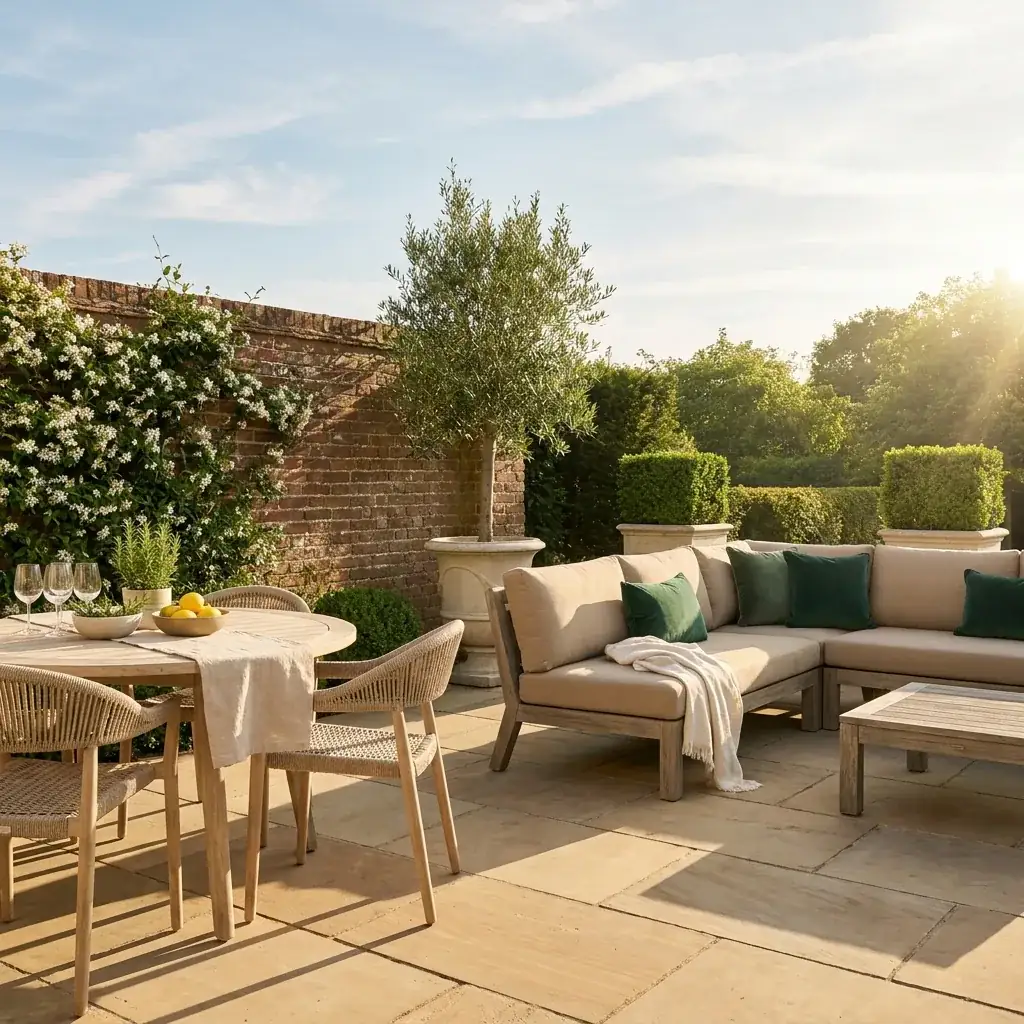
The Marbella Garden Sofa Set
£1,599
A four-seater outdoor corner set that turns a patio into a second living room. Hand-woven all-weather wicker over a powder-coated aluminium frame, with quick-dry foam cushions in a marine-grade fabric. Includes the corner sofa plus a matching tempered-glass coffee table. Weather-rated year-round.
If you are furnishing other rooms alongside your garden, take a look at our Orka Corner Sofa for the living room or our Hampton Extending Dining Table for the kitchen-diner. Coordinating indoor and outdoor aesthetics — similar tones, complementary materials — makes the transition through patio doors feel seamless.
Frequently Asked Questions#
What is the most durable material for garden furniture?#
Teak and powder-coated aluminium are the most durable materials for UK gardens. Teak contains natural oils that resist rot and can last 50 or more years with minimal maintenance. Aluminium will not rust and is lightweight enough to move for cleaning. Both handle British rain and frost far better than untreated softwood.
Should I cover my garden furniture in winter?#
Yes — covers extend the lifespan of any outdoor furniture significantly. Use breathable, UV-stabilised covers that allow moisture to escape while blocking rain. Alternatively, store cushions indoors and use fitted covers for frames. Even weather-resistant rattan benefits from covering during prolonged wet spells.
How do I stop garden furniture cushions going mouldy?#
Store cushions upright in a dry, ventilated area when not in use. Choose cushions with removable, machine-washable covers and quick-dry foam cores. If mould appears, scrub with a solution of one part white vinegar to four parts water, rinse thoroughly, and dry in direct sunlight.
What size patio do I need for a 6-seater garden dining set?#
Allow a minimum of 3 m by 3 m (9 square metres) for a six-seater set with enough room to pull chairs back comfortably. Rectangular tables typically need a slightly longer footprint of 3.5 m by 2.5 m. Always leave at least 80 cm of clearance around the table for walkways.
Is rattan or metal garden furniture better for the UK climate?#
Synthetic PE rattan is excellent for the UK — it is UV-resistant, weatherproof, and lightweight. Metal furniture (especially aluminium) is more wind-resistant and longer-lasting. For the best of both worlds, many sets combine aluminium frames with woven PE rattan, offering durability and comfort in all conditions. We cover rattan in depth in our rattan garden furniture guide.
When is the best time to buy garden furniture in the UK?#
The biggest discounts typically land in September and October, when retailers clear summer stock. January sales can also yield strong deals. Buying in spring (March-April) gives you the widest selection but the fewest discounts. If you find a set you love at full price in May, it is worth buying — waiting for a sale risks the model selling out, and you lose weeks of summer use.