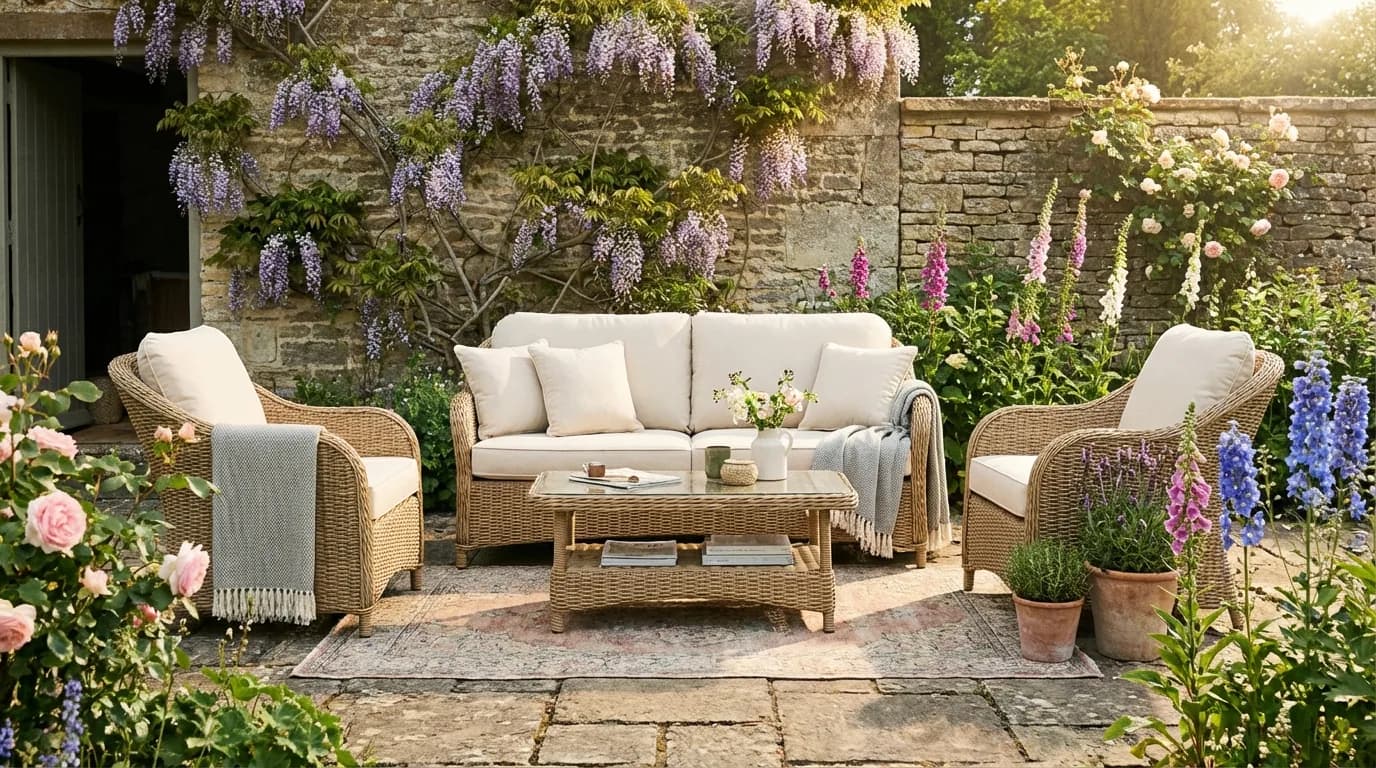
Why Rattan Has Earned Its Reputation#
There is something about rattan that just works in a British garden. Maybe it is the way the weave catches the low afternoon sun, or how it softens the hard lines of a concrete patio. Whatever the reason, rattan has quietly become the default choice for outdoor furniture across the UK, and after spending years testing, styling, and living with the stuff, I can tell you it has earned that reputation.
But not all rattan is created equal. The material you choose, the frame underneath, the cushions you pair with it, and how you look after it through our unpredictable seasons will determine whether your set still looks sharp in five years or ends up on the skip pile after two.
This guide covers everything I have learned about rattan garden furniture in the UK, from the fundamental difference between natural and synthetic weaves to a month-by-month care calendar that will keep your set looking new for a decade. If you are weighing up a purchase, this should save you from the most expensive mistakes.
Why Rattan Has Become Britain's Garden Furniture of Choice#
Walk down any suburban street in June and you will see it: rattan corner sets on decks, rattan bistro chairs on balconies, rattan dining cubes tucked against garden walls. It was not always like this. Fifteen years ago, the garden furniture market was dominated by heavy teak benches and flimsy folding chairs from the supermarket. Rattan was a niche choice, mostly associated with conservatories.
Three things changed. First, the outdoor living trend accelerated during and after the pandemic lockdowns. People invested in their gardens as extensions of their homes, not just places to mow. Second, manufacturing improved dramatically. Modern synthetic rattan is UV-stabilised, frost-resistant, and genuinely weatherproof in ways that earlier generations of plastic wicker simply were not. Third, the price point hit a sweet spot. A quality rattan set sits between the throwaway end of the market and the investment-grade teak bracket, offering genuinely good looks and comfort for a reasonable outlay.
There is also an aesthetic factor that should not be underestimated. Rattan has a warmth and texture that metal and plastic garden furniture cannot replicate. It reads as natural and inviting even when it is, technically, a petroleum-based polymer. In a country where garden time is precious and unpredictable, people want furniture that makes the space feel welcoming the moment the sun appears.
Natural Rattan vs Synthetic Rattan (PE Wicker): What's the Difference?#
This is the single most important distinction in the rattan furniture market, and getting it wrong is the most common reason people end up disappointed with their purchase.
Natural rattan is a climbing palm vine harvested primarily in Southeast Asia. It is genuinely beautiful: the grain has a warmth and irregularity that synthetic versions struggle to match exactly. But it was never designed for the British climate. Rain softens the fibres, frost cracks them, and UV bleaches the colour within a single summer. If you have a covered conservatory or a sheltered veranda with a solid roof overhead, natural rattan can look spectacular. For an open garden? Do not waste your money.
Synthetic rattan, usually referred to as PE wicker or resin wicker, is made from polyethylene strands woven over a metal frame. The best versions are hand-woven, UV-stabilised to prevent fading, and designed to withstand temperatures from -20C to 80C. The weave pattern is tight enough to shed water, and the material will not absorb moisture, swell, or rot.
When shopping for synthetic rattan, always check the frame material. Aluminium frames are rust-proof and lightweight. Steel frames are cheaper but will rust at weld points within a few years unless they have a genuinely thick powder coating. The frame fails long before the weave does, so this is where your money should go.
How Long Does Rattan Garden Furniture Last?#
This depends almost entirely on two factors: the quality of the frame and how you treat it through the seasons.
A well-made PE rattan set on a powder-coated aluminium frame should last 10 to 15 years outdoors in the UK. I have seen sets that look almost new after eight years with nothing more than an annual wash and a cover during the worst of winter. The weave itself is incredibly resilient. It does not absorb water, it does not crack in frost, and modern UV stabilisers prevent the colour shift that plagued earlier synthetic rattan.
Budget sets with thin steel frames tell a different story. Rust starts appearing at the joints within two to three years, especially if the set sits on a lawn where moisture pools around the feet. Once the frame corrodes, the weave sags and distorts. You might get five years out of a budget set if you are diligent with covers and keep it on a hard standing.
The cushions are the other weak point. Outdoor cushion foam degrades faster than the furniture itself, losing its shape and springiness over three to five years. Marine-grade fabrics resist fading and mildew far better than standard polyester. If your set comes with basic cushions, consider upgrading to quick-dry foam with removable, washable covers. Replacing cushions at the three-year mark is far cheaper than replacing the entire set.
A useful benchmark: if a rattan set costs less than 400 pounds for a four-seater corner, the frame is almost certainly mild steel, and the weave may be PVC rather than PE. PVC becomes brittle in cold weather and can crack within a single winter. Spend a bit more and get PE on aluminium.
Caring for Your Rattan: Season-by-Season UK Guide#
The British weather is rattan's toughest test. Here is what I do to keep my sets in top condition through the full cycle.
Spring (March-May): Wake-Up Service#
After a winter under covers, your rattan needs a proper spring clean. Brush off loose debris with a soft-bristle brush, working between the weave where leaves and cobwebs accumulate. Then hose the entire set down with lukewarm water and go over it with a soft cloth dipped in mild soapy water. Washing-up liquid works fine; you do not need specialist cleaners.
Check the frame at every joint. If you spot any rust on a steel frame, treat it immediately with a rust converter and touch up with exterior metal paint. Aluminium frames rarely develop issues, but check the bolt connections and tighten anything that has loosened over winter.
Bring cushions out of storage and air them in direct sunlight for a few hours before using. If they smell musty, sprinkle with bicarbonate of soda, leave for 30 minutes, then vacuum off.
Summer (June-August): Enjoy and Protect#
Summer is when your rattan earns its keep. The main risk is UV exposure on south-facing patios, so if your set sits in direct sun all day, consider a shade sail or parasol to reduce the cumulative UV load. Even UV-stabilised PE rattan will lose a fraction of its colour depth over many summers of unshielded exposure.
Wipe up spills promptly. BBQ sauce, sunscreen, and red wine are the usual culprits. A damp cloth and soapy water will handle most spills if you catch them within an hour. For stubborn stains, a paste of bicarbonate of soda and water applied to the affected area and left for 15 minutes usually does the job.
If you are not using the set for more than a week, for instance while on holiday, throw a breathable cover over it. This prevents pollen and tree sap building up, which is harder to remove than everyday dirt.
Autumn (September-November): Prepare for Dormancy#
This is the critical transition. Once the temperature drops below 10C consistently and the heavy rains start, your cushions should come indoors. Store them upright in a dry, ventilated space like a garage or utility room. Never seal them in plastic bags; trapped moisture creates mildew.
Give the rattan frames a thorough clean identical to your spring wash. This removes the summer's accumulated grime before you cover the set for winter. If you have a garden room or shed large enough, moving the furniture indoors for winter is ideal but not essential for quality PE rattan.
Apply a breathable, UV-stabilised cover. Cheap tarpaulins trap condensation against the furniture and can cause more damage than leaving the set uncovered. Proper fitted garden furniture covers cost 30 to 80 pounds and last several years.
Winter (December-February): Protect and Inspect#
If your set is outdoors under covers, check it monthly. Lift the cover, brush off any standing water that has pooled, and ensure the cover is still secure. High winds can dislodge covers and expose the furniture to unnecessary weathering.
If you spot any mould or mildew forming on the weave, wipe it down with a solution of one part white vinegar to four parts water. This kills the mould without damaging the PE rattan. Rinse with clean water and dry before re-covering.
Avoid stacking rattan furniture pieces on top of each other for winter storage. The weight can distort the weave and strain the frame joints. If space is tight, stand pieces on their end rather than stacking.
Styling Rattan Furniture: Cushions, Throws & Accessories#
Rattan is one of the most forgiving materials to style because its neutral texture pairs with almost any colour palette. Here are the approaches that consistently work best in UK gardens.
Cushion Colour Strategies#
Neutral rattan (natural, light grey, or honey tones) acts as a blank canvas. For a classic British garden look, pair with soft sage greens, muted blues, and cream cushions. For something more contemporary, charcoal cushions with a single accent colour like mustard or terracotta create a striking contrast.
Dark rattan (charcoal, graphite, or espresso) needs lighter cushions to prevent the set from looking heavy. White, light grey, or soft blush tones work well. Avoid dark cushions on dark rattan unless the set is in a very bright, sun-drenched spot.
Invest in two sets of cushion covers: a neutral set for everyday use and a bolder set for entertaining. Swapping covers takes five minutes and completely transforms the look. Choose covers with hidden zips and ties or Velcro straps to keep them anchored in wind.
Throws and Textiles#
Outdoor throws are a relatively new addition to the UK garden market and they make a genuine difference on cooler evenings. Look for acrylic or polypropylene throws that can handle damp without absorbing water. Drape one over the arm of your rattan sofa for those May evenings when the sun disappears behind a cloud and the temperature drops ten degrees in twenty minutes.
Lighting and Accessories#
Festoon lights strung above a rattan set create an atmosphere that no amount of cushion styling can match. Solar-powered options are practical and avoid trailing cables. Add a couple of outdoor lanterns with LED candles and the space becomes genuinely usable after dark.
Planters placed beside or behind your rattan set soften the transition between furniture and garden. Tall grasses, lavender, or trailing ivy in zinc or terracotta pots complement rattan beautifully. The organic textures echo each other in a way that metal or plastic furniture cannot achieve.
Rattan Dining Sets vs Rattan Sofa Sets: Which Do You Need?#
This comes down to how you actually use your garden. Be honest with yourself, because the wrong choice will sit unused for most of the summer.
If your outdoor time revolves around meals, a rattan dining set is the better investment. A six-seater cube set with folding chairs that tuck under the table is particularly space-efficient for smaller patios. Look for a table with a tempered-glass or polywood top; all-rattan table surfaces can be uneven for dining.
If your garden time is about relaxing with a drink, reading, or watching the kids play, a rattan sofa set or corner set will get far more use. Corner configurations are especially popular because they define a social zone without needing a wall behind them. They create a sense of enclosure that feels intimate without being claustrophobic.
For larger gardens, the ideal setup is both: a dining set near the kitchen door for meals, and a sofa set further into the garden for lounging. If you only have space for one, most people find a sofa set with a low coffee table more versatile than a dining set. You can eat from a coffee table in a pinch, but you cannot comfortably lounge on a dining chair.
Can You Leave Rattan Outside All Year in the UK?#
The short answer: synthetic rattan, yes. Natural rattan, absolutely not.
Quality PE rattan on an aluminium frame is engineered for year-round outdoor use. It will not rot, crack, rust, or degrade from rain, frost, or snow. The manufacturers test these materials at temperature extremes well beyond anything the UK climate produces. I have left my own set outside through three full winters with nothing more than a fitted cover, and it still looks essentially new.
That said, "can" and "should" are different questions. Leaving any furniture exposed to the elements 365 days a year without any protection will shorten its lifespan. Covers are the minimum. They keep rain, fallen leaves, bird droppings, and UV off the furniture during the months you are not using it. A covered set will outlast an uncovered one by three to five years, easily.
The cushions are the non-negotiable part. Even marine-grade outdoor cushion fabric will develop mildew if left outside through a wet British winter. The foam core absorbs moisture over time, loses its resilience, and starts to smell. Bring your cushions indoors between October and April. It is the single most impactful thing you can do to protect your investment.
Never pressure-wash synthetic rattan. The high-pressure jet can force water into the hollow core of the weave strands, can loosen the weave from the frame, and may damage the UV-stabilising coating on the surface. A standard garden hose is all you need.
Our Pick: The Marbella Garden Sofa Set#
If you are looking for a rattan set that ticks every box we have discussed, the Marbella is where I would start.
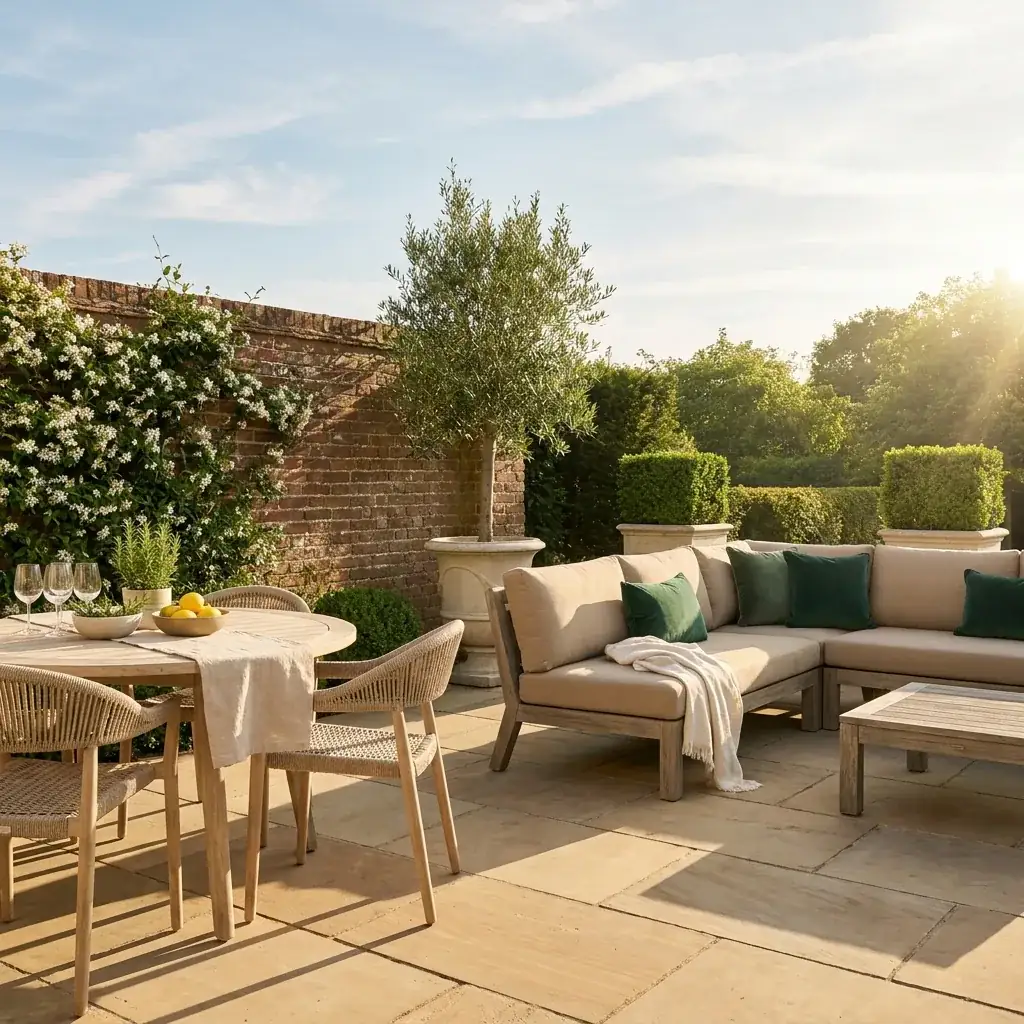
The Marbella Garden Sofa Set
£1,599
A four-seater outdoor corner set that turns a patio into a second living room. Hand-woven all-weather wicker over a powder-coated aluminium frame, with quick-dry foam cushions in a marine-grade fabric. Includes the corner sofa plus a matching tempered-glass coffee table. Weather-rated year-round.
The Marbella is a four-seater outdoor corner set built on a powder-coated aluminium frame, which means rust is simply not a concern. The hand-woven all-weather wicker is PE rattan rated for year-round outdoor use across the full range of UK conditions: summer heat, autumn rain, winter frost.
The cushions use quick-dry foam with marine-grade fabric covers that resist fading, mildew, and water absorption. They are removable for washing. The set also includes a matching tempered-glass coffee table, which is a genuine bonus since buying the table separately typically adds 150 to 250 pounds.
At 1,599 pounds, the Marbella sits in the mid-market sweet spot. You are paying for an aluminium frame and PE weave that will last well over a decade, not a steel frame that will rust at the joints within three years. It arrives in two pieces and clips together without tools, so setup takes minutes rather than hours. Available in Natural Wicker or Charcoal Wicker, with free UK delivery in 10 to 14 days.
For the full picture on choosing garden furniture, including materials beyond rattan, read our complete garden furniture guide.
Frequently Asked Questions#
What is the difference between natural and synthetic rattan?#
Natural rattan is a palm vine harvested from tropical forests. It is lightweight and has a beautiful organic grain, but it is not weatherproof. Rain causes the fibres to swell and crack, UV bleaches the colour, and frost can split the material entirely. It belongs indoors or in a fully sheltered conservatory.
Synthetic rattan, also called PE wicker or resin wicker, is made from polyethylene plastic strands woven over a metal frame. It is designed specifically for outdoor use: UV-stabilised, waterproof, frost-proof, and maintenance-free. For any UK garden that sees rain (which is all of them), synthetic rattan is almost always the better choice.
How do I clean rattan garden furniture?#
Hose down with lukewarm water and wipe with a soft cloth dipped in mild soapy water. Washing-up liquid is fine. For dirt trapped in the weave, use a soft-bristle brush and work gently between the strands. Rinse thoroughly and allow to air-dry before covering or storing. Avoid pressure washers, which can damage the weave and strip the UV coating. For mould or mildew, use a solution of one part white vinegar to four parts water, wipe on, leave for ten minutes, and rinse.
How long does synthetic rattan garden furniture last?#
A quality PE rattan set on an aluminium frame will last 10 to 15 years outdoors in the UK with minimal maintenance. Budget sets with steel frames typically last three to five years before rust compromises the structure. The cushions are usually the first component to need replacing, typically after three to five years depending on the foam quality and how well they are stored in winter. The weave itself is remarkably durable and rarely fails before the frame or the cushions.
Can rattan furniture stay outside all year in the UK?#
Synthetic PE rattan can stay outside year-round. It is engineered for permanent outdoor exposure and will handle rain, frost, and snow without degrading. However, using a breathable fitted cover during the winter months will extend the set's lifespan by several years. Cushions should always be stored indoors between October and April to prevent mildew and foam degradation. Natural rattan should never be left outside permanently: it will crack and rot within a single British season.
What colour rattan is best for a small garden?#
Light grey or natural-tone rattan makes a small garden feel more open and airy. Dark finishes like charcoal or espresso can feel heavy in a compact space, though they work well against light-coloured walls or pale paving. If your garden gets a lot of direct sun, lighter colours also stay cooler to the touch, which matters on south-facing patios in July. Match your cushion colours to your planting scheme, using two or three complementary tones at most to avoid visual clutter in a small area.
Is rattan garden furniture comfortable without cushions?#
The woven surface of synthetic rattan has a degree of natural flex that makes it more comfortable than rigid metal or plastic chairs, even without cushions. You can sit on bare rattan comfortably for 20 to 30 minutes. For longer periods, cushions make a significant difference to comfort, particularly on deeper-seated sofa sets where back support matters. If you are choosing a dining set for short meal-time use, you may find that thin seat pads are sufficient rather than full deep cushions.