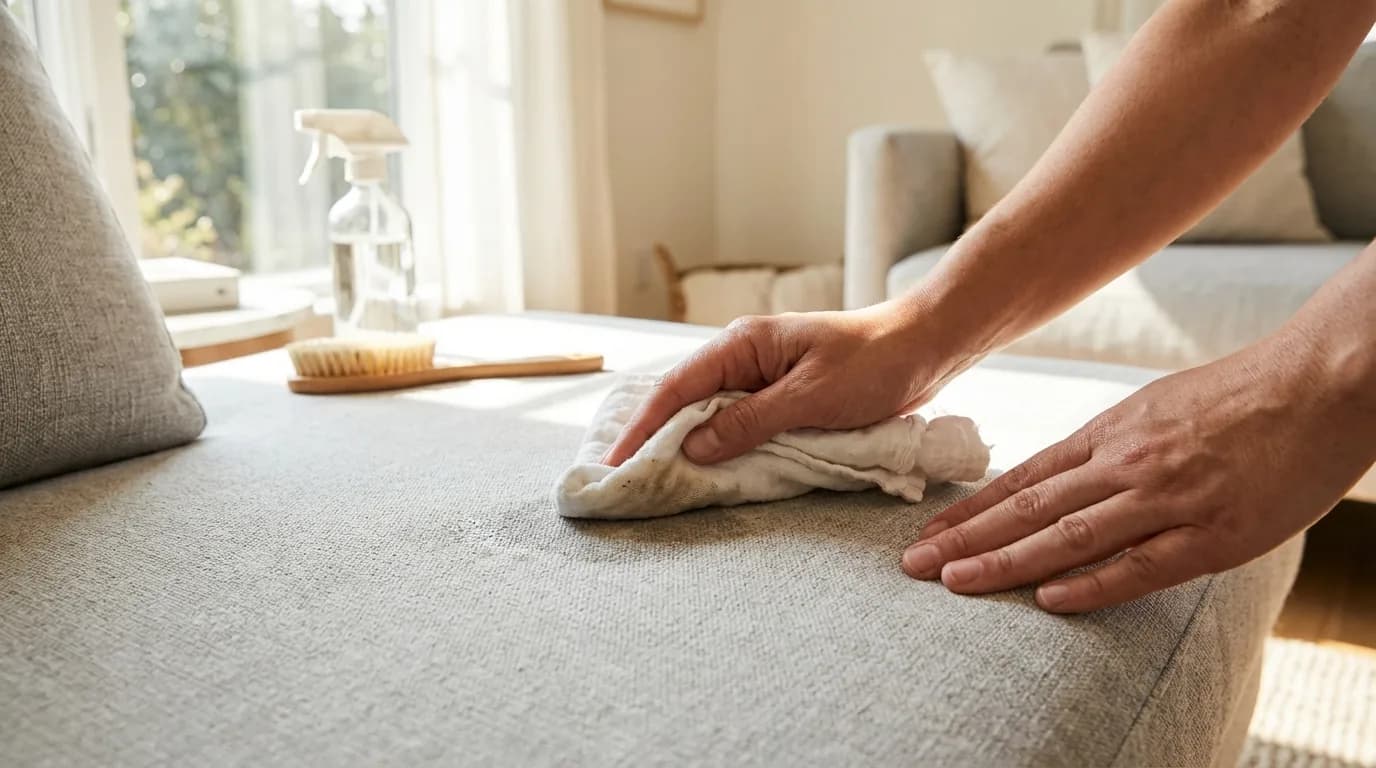
I've owned fabric sofas my entire adult life. I've also spilled red wine on one at a dinner party, watched a toddler grind chocolate buttons into another, and inherited a cat who treated the arm of my chenille two-seater as a personal spa. Through all of it, I've learned one thing: fabric sofas are far more resilient than people give them credit for — but only if you clean them properly.
Get it wrong and you end up with watermarks, colour bleeding, or that dreaded halo effect where the "cleaned" patch looks worse than the stain did. Get it right and even a ten-year-old sofa can look like it was delivered last month.
This is the guide I wish I'd had before I attacked a coffee stain with neat bleach in 2014. (Don't do that.)
Before You Start: Check Your Sofa's Cleaning Code#
Every upholstered sofa sold in the UK should have a care label, usually stapled to the underside of a cushion or tucked beneath the arm. That label carries a cleaning code — a single letter that dictates what you can and cannot safely put on the fabric.
W — Water-based cleaning agents only. This is the most common code and the easiest to work with. You can use water, mild detergent, and most shop-bought upholstery cleaners.
S — Solvent-based cleaning agents only. Water will leave marks on these fabrics. You need a dry-cleaning solvent or a specialist S-code upholstery cleaner.
WS — Either water-based or solvent-based agents are fine. This is the most forgiving code.
X — Vacuum only. No liquids of any kind. Professional dry cleaning is the sole option for stain removal.
If you cannot find a care label, test any cleaning solution on a hidden area first — the back of the sofa near the base, or the underside of a removable cushion cover. Wait 24 hours and check for discolouration or texture change before proceeding.
Ignore this code at your peril. I once watched a friend cheerfully spray a water-based cleaner across a silk-blend S-code sofa. The water ring that formed took a professional three visits to remove.
The Essential Fabric Sofa Cleaning Kit#
You don't need a cupboard full of specialist products. Here's what I keep under my sink:
- A decent upholstery attachment for your vacuum — the flat, wide nozzle, plus the crevice tool
- Clean white microfibre cloths — white specifically, so dye transfer is never a concern
- A soft-bristled brush — a clean shoe brush or baby hairbrush works perfectly
- Washing-up liquid — basic, clear, fragrance-free if possible (Fairy Original is fine)
- White distilled vinegar — the cleaning kind, not malt
- Bicarbonate of soda — the single most useful sofa cleaning product in existence
- A spray bottle — for mixing solutions
- A bowl of clean, lukewarm water — for rinsing and diluting
For S-code fabrics, add a tin of dry-cleaning solvent (available from most hardware shops) or a specialist S-code upholstery spray.
Avoid coloured cloths, patterned sponges, or kitchen roll with printed designs. Dye can transfer to damp fabric and create a whole new stain.
How to Vacuum Your Sofa Properly#
Vacuuming sounds trivially obvious, but technique matters. Most people run the upholstery attachment across the seat cushions and call it done. That removes about 40% of the dust, crumbs, and allergens living in your sofa.
Here's the proper method:
- Remove all cushions. Every last one — seat cushions, back cushions, scatter cushions. Set them aside.
- Vacuum the frame. Get into every crevice where the arms meet the back, where the seat meets the base. This is where coins, crumbs, pet hair, and an alarming quantity of dust congregate. Use the crevice tool.
- Vacuum each cushion individually. Both sides, all edges. If your cushions have zip-off covers, unzip them and vacuum inside the cover too — dust mites love the warm, dark interior.
- Vacuum the underside of the sofa. Flip it gently or tilt it. Dust accumulates underneath and works its way up through the fabric.
- Brush the fabric. After vacuuming, use a soft-bristled brush to lift the nap. This is especially important for velvet and chenille, which flatten under body weight.
Do this weekly if you have pets. Fortnightly otherwise. It takes ten minutes and it's the single most effective thing you can do to extend your sofa's life.
Spot Cleaning Fresh Stains: The Golden Rules#
When something spills, you have roughly 60 seconds before panic sets in and about five minutes before the stain starts to set. Here are the rules that apply to every fresh stain on every W or WS-code fabric:
Blot, never rub. Rubbing pushes the liquid deeper into the fibres and spreads the stain outward. Press a clean white cloth firmly onto the spill and lift. Repeat with a fresh section of cloth until no more colour transfers.
Work from the outside in. Start at the edge of the stain and move toward the centre. This prevents the stain from spreading into a larger area.
Use cold or lukewarm water only. Hot water sets protein-based stains (milk, blood, egg) permanently. When in doubt, go cold.
Less is more. Apply cleaning solution sparingly. An over-wet sofa takes hours to dry and can develop mildew or watermarks. Lightly dampen — don't soak.
Always rinse. After applying any cleaning solution, go over the area with a cloth dampened with plain water to remove residue. Leftover detergent attracts dirt and the spot will re-soil faster than the surrounding fabric.
Dry thoroughly. Open windows, point a fan at the area, or use a hairdryer on a cool setting. Never leave a damp patch to air-dry in a closed room.
Common Stain Removal: Coffee, Wine, Ink, Grease, Pet Accidents#
Different stains need different approaches. Here's what actually works for the five most common fabric sofa disasters in the UK:
A Note on Wine#
The old trick of pouring white wine on a red wine stain is technically valid — the acidity in white wine helps dissolve the pigment — but soda water does the same job without wasting a perfectly good Sauvignon Blanc. Cover the stain with salt or bicarbonate of soda first to draw out moisture, leave it for 15 minutes, brush it off, then treat with your solution.
A Note on Pet Accidents#
If you have pets, invest in an enzyme-based cleaner. Standard detergent masks the smell for human noses but leaves enough scent for your dog or cat to revisit the same spot. Enzyme cleaners break down the uric acid crystals that cause the lingering odour. They're available at every pet shop and most supermarkets.
Deep Cleaning a Fabric Sofa at Home#
Beyond spot cleaning, a full deep clean once or twice a year keeps your sofa looking fresh and smelling clean. Here's the step-by-step process I follow:
Step 1: Prepare the Sofa#
Remove all cushions and covers. If your cushion covers are removable and machine-washable (check the label), wash them on a cool, gentle cycle and let them air-dry — never tumble-dry, as this can shrink the fabric.
Vacuum the entire sofa frame and all cushions thoroughly, following the method above.
Step 2: Deodorise with Bicarbonate of Soda#
Sprinkle a generous layer of bicarbonate of soda across every fabric surface — seat, arms, back, cushions. Leave it for at least 30 minutes. For stubborn odours (pet smells, smoke, cooking), leave it overnight.
Bicarb absorbs odours rather than masking them. It's mildly abrasive too, which helps lift surface grime from the fabric fibres.
Vacuum the bicarb off thoroughly.
Step 3: Make Your Cleaning Solution#
For W and WS-code fabrics, mix:
- 500ml warm water
- 1 tablespoon clear washing-up liquid
- 1 tablespoon white distilled vinegar
Pour into a spray bottle and shake gently. You want suds, not a soaking wet spray.
Step 4: Clean Section by Section#
Work in small sections — one cushion at a time, one arm at a time. Lightly mist the cleaning solution onto the fabric (don't drench it), then use a clean white microfibre cloth to work the solution into the fabric with gentle circular motions.
Rinse your cloth frequently in clean water and wring it out until almost dry. Go over each section again to remove soap residue.
Step 5: Dry Properly#
Open windows. If you have a fan, aim it at the sofa. In winter, turn the heating up for a couple of hours. The sofa should be touch-dry within four to six hours.
Never sit on a damp sofa. Body weight compresses wet fibres and can cause permanent flattening and watermarks. Wait until it's fully dry.
Step 6: Brush and Fluff#
Once completely dry, use a soft-bristled brush to restore the nap. Fluff cushions by hand and replace them.
Steam Cleaning: When and How to Do It Safely#
Steam cleaners are enormously effective on fabric sofas — the heat kills dust mites, bacteria, and most odour-causing organisms, while the steam lifts embedded dirt without chemicals.
However, steam is not suitable for every fabric:
- Safe for: Polyester, microfibre, most cotton blends, performance fabrics
- Use with caution on: Linen (can shrink), chenille (can flatten the pile permanently)
- Avoid on: Velvet (unless specifically marketed as steam-safe), silk, S-code and X-code fabrics
If your sofa is steam-safe, here's how to do it properly:
- Vacuum first — always.
- Use the upholstery attachment, not the floor head.
- Hold the nozzle 10-15cm from the fabric surface. Don't press it directly against the sofa.
- Work in straight, overlapping passes. Don't linger in one spot.
- Blot any excess moisture immediately with a clean towel.
- Allow six to eight hours to dry fully — ideally with windows open.
Handheld steam cleaners are available from about £30. For a serious deep clean, hire a professional machine from a tool hire shop — expect to pay £25-40 per day.
Professional Cleaning: When to Call in the Experts#
There's no shame in calling a professional upholstery cleaner. Some jobs genuinely need specialist equipment and expertise:
- S-code or X-code fabrics — if you're not confident using solvents, a professional is the safer bet
- Set-in stains that haven't responded to home treatment
- Large-scale spills — an entire glass of red wine across a three-seater is a different proposition from a small splash
- Smoke or fire damage — the particulates embed deep into fabric and padding
- Annual maintenance cleans on high-value furniture
In the UK, expect to pay between £60 and £150 for a professional sofa clean, depending on the size of the piece and your location. London prices sit at the higher end, naturally.
Look for a technician who's a member of the National Carpet Cleaners Association (NCCA) or holds an IICRC certification. Both require training and adherence to standards.
Ask your cleaner whether they use hot water extraction (HWE) or dry cleaning. HWE is the gold standard for most fabric sofas — it flushes dirt out rather than pushing it around. Dry cleaning is better for delicate or S-code fabrics.
How Often Should You Clean Your Fabric Sofa?#
The honest answer depends on how your sofa is used. Here's a realistic schedule:
Weekly:
- Vacuum cushions and crevices
- Plump and rotate cushions (prevents uneven wear)
Monthly:
- Vacuum the entire sofa including the underside
- Spot-clean any visible marks
Every 3-6 months:
- Bicarbonate of soda deodorising treatment
- Full wipe-down with cleaning solution
Annually:
- Full deep clean (DIY or professional)
- Check and tighten any loose legs or fittings
After every incident:
- Spot-clean immediately — the faster you act, the better the outcome
If you have children under five, dogs, or a household that eats dinner on the sofa regularly, shift everything up one notch. Weekly becomes twice-weekly, monthly becomes fortnightly.
Fabric Protection Sprays: Do They Actually Work?#
Short answer: yes, but with caveats.
Fabric protector sprays (Scotchgard is the most well-known brand, but there are plenty of alternatives) create an invisible barrier that causes liquids to bead on the fabric surface rather than soaking in. This gives you more time to blot up a spill before it stains.
They genuinely work — I've watched red wine sit on top of a treated fabric sample like a droplet on a waxed car bonnet. But there are limitations:
- They don't prevent stains entirely. If you leave a spill long enough, it will still penetrate. Protection sprays buy you time, not immunity.
- They wear off. Most sprays need reapplying every six to twelve months, or after any deep clean.
- They can alter texture. Some sprays make fabric feel slightly stiffer or different to the touch. Always test on a hidden area first.
- They're not suitable for all fabrics. Avoid using on leather, faux leather, or any fabric with an existing finish (such as waxed cotton).
For a family home, I think they're absolutely worth it. A £10 can of Scotchgard has saved me from at least three emergency stain removal sessions.
How to Apply Fabric Protector Spray#
- Clean the sofa first — protector spray locks in whatever's already on the fabric, dirt included.
- Spray evenly from about 15cm away, using slow, sweeping passes.
- Allow to dry completely (usually 2-4 hours).
- Apply a second coat for maximum protection.
- Reapply every 6-12 months.
Choosing a Sofa That's Easy to Clean#
If you're reading this guide because your current sofa has defeated you, it might be worth thinking about fabric choice for your next purchase. Some fabrics are dramatically easier to maintain than others.
Performance fabrics — typically polyester or polyester-blend weaves treated with stain-resistant technology at the manufacturing stage — are the gold standard for busy households. They're often marketed as "easy-clean" or "family-friendly" and they genuinely live up to the billing.
For a deeper dive into every fabric type, their durability scores, and which works best for your lifestyle, read our comprehensive sofa fabric guide.
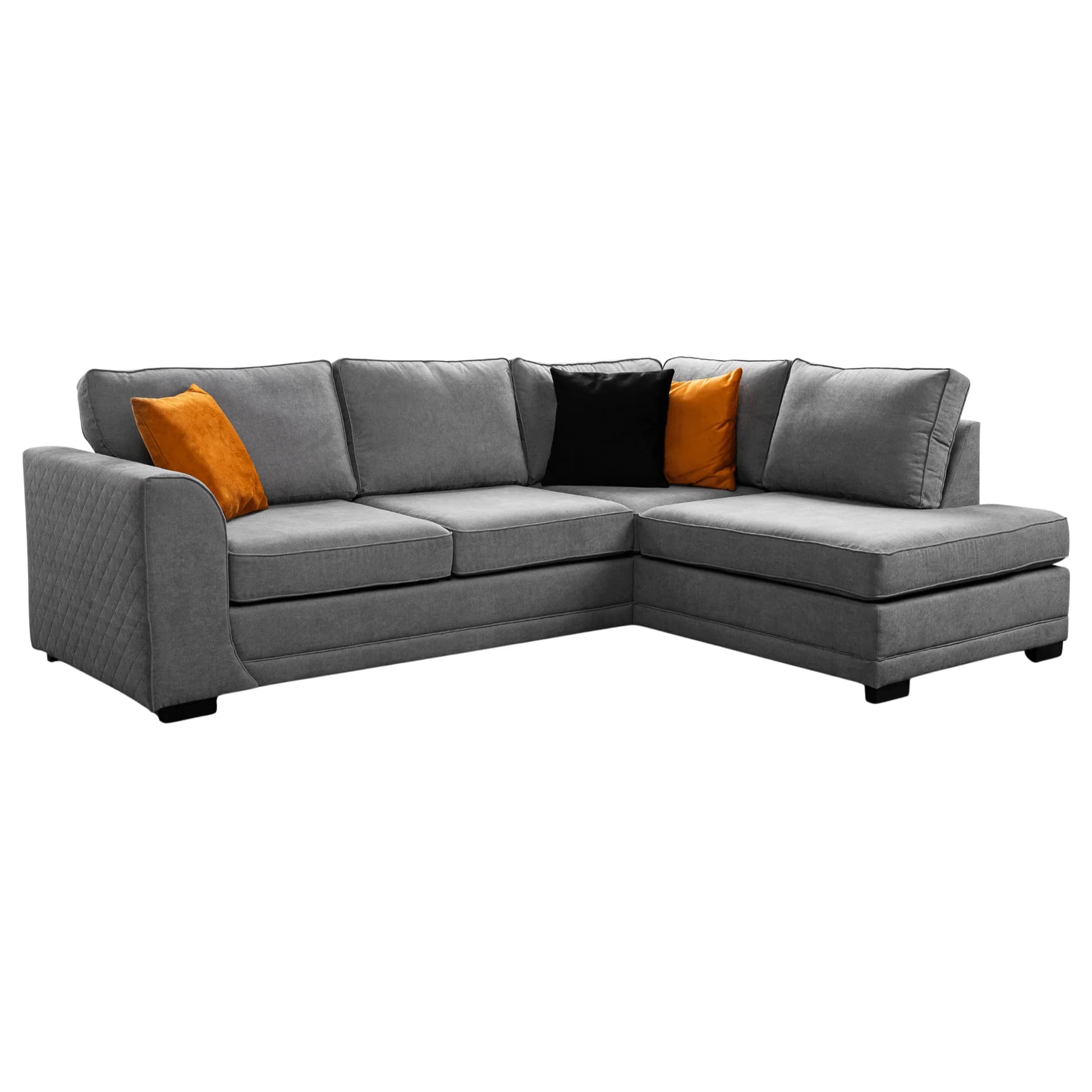
The Orka Corner Sofa
£1,899
A generous L-shaped corner sofa hand-built in our UK workshop. Premium woven fabric across a kiln-dried hardwood frame with high-resilience foam seats and feather-mix backs. Right-hand chaise as standard, left-hand on request. Choose from three signature colours.
The Orka is built with a premium woven polyester-blend fabric that resists staining and cleans up easily with the water-based methods described in this guide. It's W-code, so you can use any of the cleaning solutions above without worry. The removable cushion covers are an added bonus — unzip and machine-wash on a cool cycle when needed.
If you're after a family sofa that looks premium but won't have you on your hands and knees with a bottle of vinegar every weekend, it's a genuinely smart choice. Read our full corner sofa buying guide for more on sizing and configuration.
Frequently Asked Questions#
Can I use a carpet cleaner on my fabric sofa?#
You can, but proceed with caution. Carpet cleaning machines often use more water than upholstery requires, which can oversaturate the cushion filling and create drying problems. If you do use one, select the upholstery attachment (most machines include one), use the lowest water setting, and extract as much moisture as possible on each pass. Allow at least 12 hours to dry fully.
How do I get rid of sofa smells without washing?#
Bicarbonate of soda is your best friend. Sprinkle it generously across the sofa, leave for at least 30 minutes (overnight for stubborn odours), then vacuum thoroughly. For persistent smells — pet odour, smoke, or damp — an enzyme-based spray followed by bicarb is more effective than either alone. Avoid fabric freshener sprays like Febreze as a long-term solution; they mask odour rather than removing it.
Is it safe to clean a fabric sofa with vinegar?#
White distilled vinegar diluted in water (roughly 1:2 ratio) is safe for most W-code and WS-code fabrics. It's mildly acidic, which helps break down tannin-based stains (tea, coffee, wine) and neutralise odours. However, do not use vinegar on S-code fabrics, silk, or any fabric where the care label specifically warns against water-based cleaning. Always test on a hidden area first.
How do I remove water marks from a fabric sofa?#
Watermarks form when minerals in the water dry and leave a visible ring. Dampen the entire affected area (not just the mark) with distilled water using a spray bottle, then blot evenly with a clean cloth. The goal is to even out the moisture so no ring forms as it dries. For stubborn watermarks, a light application of your vinegar solution followed by even blotting usually does the trick.
Can I put fabric sofa cushion covers in the washing machine?#
Only if the care label explicitly says so. Many modern sofas have removable, machine-washable covers — look for a label inside the zip that confirms this. Wash on a cool cycle (30C max), use a gentle detergent, and never tumble-dry. Reshape the cover while damp and let it air-dry flat or draped over a clothes horse. Replace the cover on the cushion while still very slightly damp to avoid shrinkage making it difficult to refit.
How long does it take for a fabric sofa to dry after cleaning?#
Typically four to eight hours for a light surface clean, and up to 24 hours after a deep clean or steam clean. Drying time depends on the fabric type, room temperature, ventilation, and how much moisture was used. Speed up the process by opening windows, running a fan, or using a dehumidifier. Never use the sofa until it's completely dry to the touch — sitting on damp fabric causes watermarks and can flatten the filling.