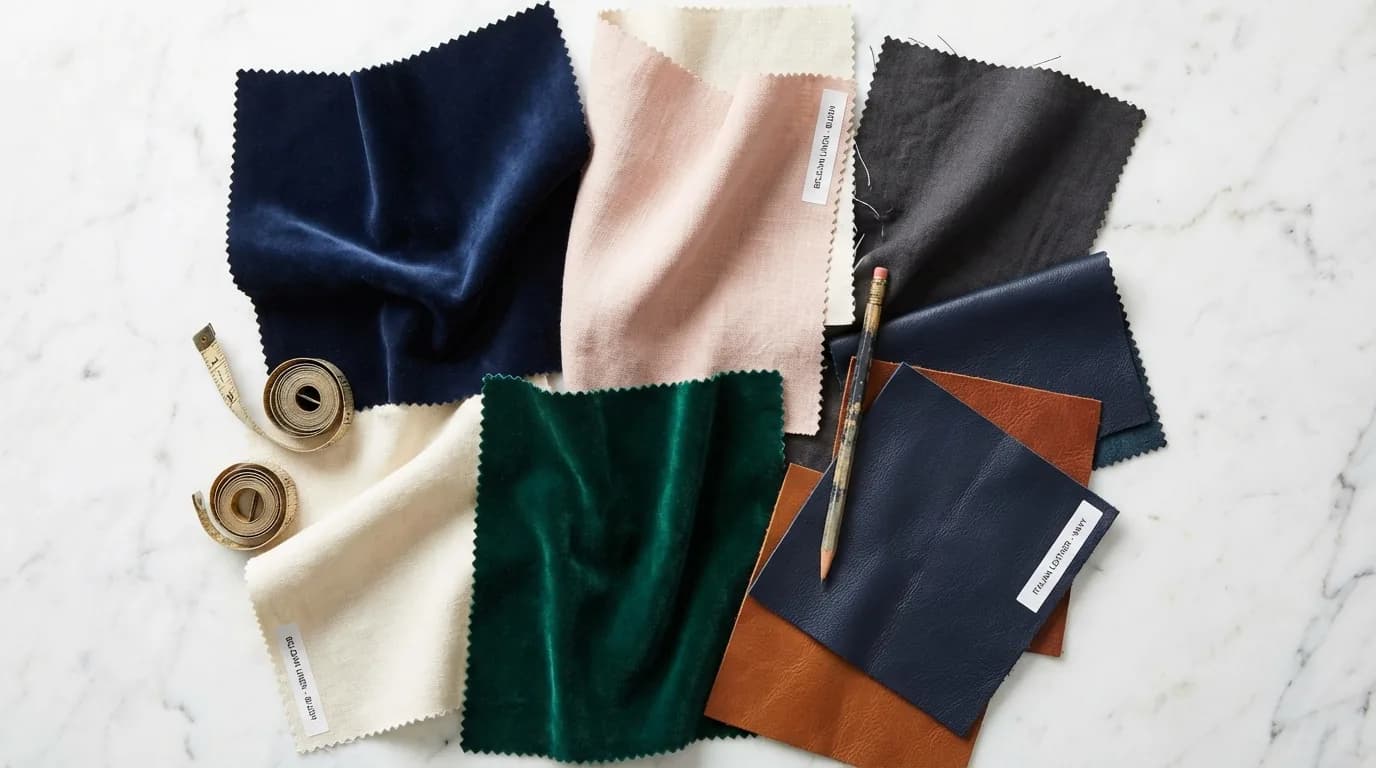
I spent six weeks choosing the fabric for my last sofa. Six weeks of swatching, Googling, rubbing samples between my fingers in showrooms, and interrogating sales assistants who clearly wished I'd just pick the grey polyester and leave. By the end of it, I knew more about Martindale rub counts than any reasonable person should.
That obsessive research wasn't wasted, though. Three years on, the sofa still looks as good as the day it arrived — and that's with a dog, a toddler, and a household that considers "eating dinner on the sofa" a legitimate lifestyle choice. The right fabric makes all the difference. The wrong one, and you'll be shopping again inside 18 months.
This guide covers every common sofa fabric available in the UK, with honest assessments of durability, comfort, maintenance, and which one suits your actual life — not the aspirational version of it.
Why Fabric Choice Matters More Than You Think#
Most people choose a sofa based on shape, size, and colour. Fabric barely registers as a decision — it's usually whatever the display model comes in, or whichever sample looked nicest under the showroom lights.
That's a mistake. Fabric determines:
- How long the sofa lasts. A poor-quality fabric pills, fades, and wears through within two to three years. A good one looks fresh after a decade.
- How easy it is to clean. Some fabrics shrug off red wine. Others absorb it permanently before you've reached the kitchen roll.
- How it feels to sit on. Texture is subjective but significant. Velvet feels luxurious in winter and sticky in August. Linen breathes beautifully but wrinkles if you look at it.
- How it ages. Some fabrics develop a lovely patina over time. Others just look tired.
- How it affects allergies. Tightly woven synthetics trap fewer allergens than loose natural fibres. If anyone in your household has asthma or dust mite allergies, this matters enormously.
The frame, the filling, the springs — all of those are important. But fabric is the surface you interact with every single day. It's worth getting right.
The Big Comparison: Every Sofa Fabric Ranked#
Here's the side-by-side breakdown of every common sofa fabric sold in the UK. Use this as your starting point, then read the detailed sections below for the full picture.
Now let's dig into each one properly.
Cotton and Linen: Natural Fibres for Relaxed Living#
Cotton#
Cotton is the default fabric for affordable sofas in the UK. It's breathable, soft straight out of the box, and takes dye well — which means the colour range is enormous. If you've sat on a sofa at someone's house and thought "that feels nice," there's a good chance it was cotton.
The downsides are real, though. Pure cotton wrinkles, stains easily, pills over time, and fades in direct sunlight. It's not especially durable in high-traffic situations — a cotton sofa in a family living room will start looking worn within three to four years.
Best for: Guest rooms, studies, low-traffic sitting rooms, or any space where the sofa doesn't get daily heavy use.
Avoid if: You have children under ten, shedding pets, or a south-facing living room with big windows.
A cotton-polyester blend addresses most of cotton's weaknesses while keeping the natural feel. If you love the idea of cotton but live in the real world, look for a blend with at least 40% polyester.
Linen#
Linen is the fabric equivalent of a linen shirt — beautiful, breathable, effortlessly elegant, and permanently creased. It's a natural fibre with a wonderful textured hand-feel that looks stunning in magazine photoshoots and farmhouse-chic interiors.
In practice, linen sofas are high-maintenance. The fabric wrinkles the moment you sit on it. It stains easily and doesn't respond well to water-based cleaning (many linen upholstery fabrics carry an S code). It's also prone to fading and, in my experience, cat claws find linen irresistible.
Best for: Formal living rooms, adult-only households, period properties where the aesthetic matters more than absolute practicality.
Avoid if: You need a sofa that looks tidy without daily plumping and smoothing, or if anyone in the house is likely to eat or drink anywhere near it.
Both cotton and linen benefit enormously from a fabric protector spray applied after purchase. It won't make them bulletproof, but it buys you precious seconds during a spill. See our guide on how to clean a fabric sofa for application tips.
Polyester and Microfibre: The Practical All-Rounders#
Polyester#
If there's a single fabric I'd recommend for a family home without hesitation, it's polyester — or more specifically, a high-quality woven polyester blend. It ticks every practical box: durable, stain-resistant, fade-resistant, easy to clean, and available in textures that genuinely rival natural fibres.
Modern polyester upholstery fabrics bear no resemblance to the shiny, static-prone synthetics of the 1980s. Performance polyesters like those used in premium sofas are woven to mimic the texture and drape of natural fibres while offering dramatically better durability. A good polyester fabric will handle 40,000+ Martindale rubs without showing wear.
The Orka Corner Sofa, for instance, uses a premium woven polyester-blend fabric that looks and feels like a high-end natural weave but cleans up with nothing more than a damp cloth and some washing-up liquid.
Best for: Most households. Families, pet owners, people who eat on the sofa, people who don't want to think about fabric care. There's a reason it's the most popular choice.
Avoid if: You specifically want the unique character of a natural fibre and are willing to accept the maintenance trade-off.
Microfibre#
Microfibre is a type of polyester with extremely fine fibres — typically 100 times thinner than a human hair. The result is a fabric with a soft, suede-like texture that's remarkably stain-resistant. Liquids bead on the surface rather than soaking in, making it one of the most forgiving fabrics for households with pets and children.
The downside is aesthetic. Microfibre can look and feel synthetic up close, and it doesn't have the visual depth of woven fabrics. It also shows body impressions more readily — you'll see exactly where everyone's been sitting.
Best for: Families with young children, pet owners who want zero-maintenance fabric, rental properties, playrooms.
Avoid if: You're after a premium look and feel. Microfibre is practical, not luxurious.
Velvet: Luxury That's More Durable Than You'd Expect#
Velvet has a reputation problem. People assume it's delicate, difficult to maintain, and unsuitable for anything except a formal drawing room. That's only half true.
Traditional cotton velvet is indeed delicate — it marks easily, crushes under pressure, and water stains it permanently. But the vast majority of velvet sofas sold in the UK today use polyester velvet, which is a completely different proposition. Polyester velvet retains the luxurious sheen and depth of colour that makes velvet so appealing, while being dramatically more durable and stain-resistant.
A good polyester velvet will handle 50,000+ Martindale rubs. It's resistant to fading, doesn't pill, and most spills can be blotted up before they set. The "crushed" look that worries people is actually a feature of how velvet catches the light — it's part of the aesthetic, not a defect.
Best for: Living rooms where you want a visual statement, bedrooms (a velvet bed frame or daybed is gorgeous), and any space where you want to elevate the atmosphere. If you're drawn to rich jewel tones — emerald, navy, plum — velvet is the only fabric that does them justice.
Avoid if: You have cats. Cat claws and velvet pile are natural enemies. Even polyester velvet will show claw pulls. Also avoid if you dislike the "crushing" effect — some people find it untidy.
To remove light crushing from velvet, hold a garment steamer 10-15cm from the surface and brush the pile with a soft cloth while the steam relaxes the fibres. Never press a hot iron directly onto velvet.
Chenille: The Soft Middle Ground#
Chenille is named after the French word for caterpillar, which describes the fuzzy, tufted yarn used to create it. It's extraordinarily soft to the touch — arguably the softest common upholstery fabric — and it has a subtle sheen that photographs beautifully.
In terms of durability, chenille sits in the middle of the pack. It's softer and more inviting than polyester but less hardwearing. The tufted construction means it can snag on sharp objects (pet claws, belt buckles, zips on cushion covers) and once pulled, the loops are difficult to repair.
Chenille also shows seating marks — the fibres flatten where you sit, creating a slightly different shade. This is normal and not a defect, but it bothers some people. Regular brushing with a soft-bristled brush keeps it under control.
Best for: Comfort-first buyers, bedroom sofas, snugs, reading nooks — any space where the sofa is about sinking in and relaxing rather than looking showroom-perfect at all times.
Avoid if: You have cats (snag risk), young children who climb furniture with shoes on, or if you're particular about a uniform appearance across the sofa surface.
Leather vs Fabric: The Eternal Debate#
This is the question that divides every couple in the showroom. Here's the honest comparison:
Leather wins on: durability (full-grain lasts 15-25 years), easy cleaning (damp cloth wipe), hypoallergenic properties (no dust mite harbourage), and ageing beautifully with patina.
Fabric wins on: warmth from first sit (no leather chill in an unheated British living room), colour variety (hundreds of options vs a few dozen), grip (no sliding around in shorts), comfort for curling up, and price (significantly cheaper at equivalent quality).
The honest verdict: for a family with dogs who hate cleaning, leather is pragmatic. For warmth, comfort, and aesthetic flexibility, fabric wins. But avoid cheap leather — budget sofas under £800 are almost always bonded or corrected-grain, which peels and cracks within three years. A good polyester fabric will outlast cheap leather every time.
For our take on the ideal fabric sofa configuration, have a look at our corner sofa buying guide.
Best Sofa Fabric for Pets and Children#
Let's be blunt: if you share your home with dogs, cats, or small children, your fabric choice is constrained. Aesthetics matter, but survivability matters more.
Best choices: Microfibre (top pick — stain-resistant, fur brushes off), tightly woven polyester (durable, easy to clean, pet hair doesn't embed), leather (wipes clean, hypoallergenic), and performance fabrics like Crypton or Revolution (engineered for exactly this, machine-washable covers).
For families with children specifically, darker colours and patterns hide inevitable marks far better than pale solids — regardless of which fabric you choose.
Avoid: Linen (wrinkles, stains, snags), silk, loose-weave cotton (absorbs everything), and light velvet (shows every mark).
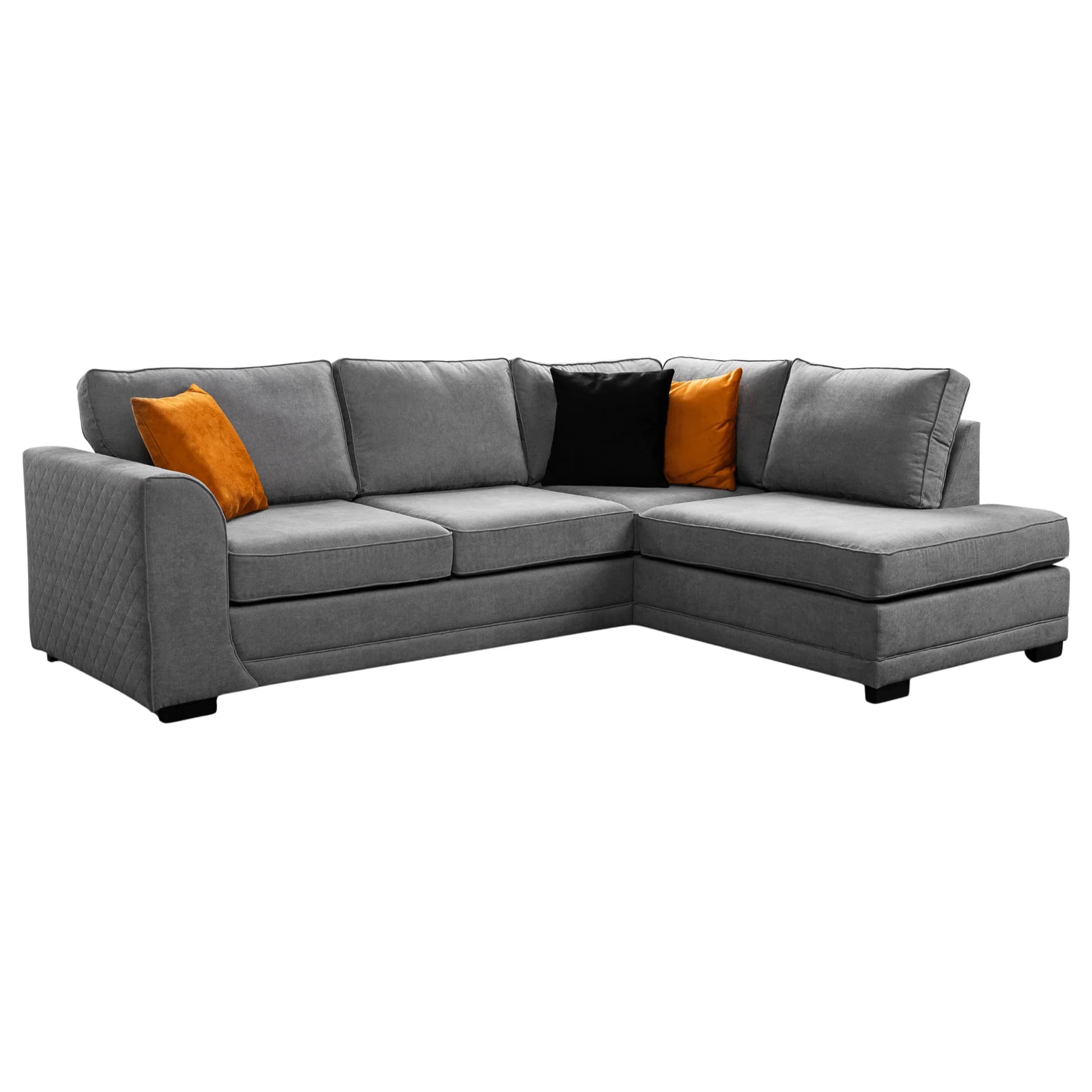
The Orka Corner Sofa
£1,899
A generous L-shaped corner sofa hand-built in our UK workshop. Premium woven fabric across a kiln-dried hardwood frame with high-resilience foam seats and feather-mix backs. Right-hand chaise as standard, left-hand on request. Choose from three signature colours.
The Orka's woven polyester-blend fabric lands squarely in the sweet spot for households with pets and children — durable enough to handle daily life, soft enough to feel premium, and cleanable with the basic methods in our fabric sofa cleaning guide.
Best Sofa Fabric for Allergies#
Allergies are an underappreciated factor in sofa selection. If anyone in your household suffers from asthma, hay fever, or dust mite allergies, fabric choice can make a tangible difference to daily comfort.
Best choices:
- Leather or faux leather — non-porous surfaces don't harbour dust mites, pollen, or pet dander. Easy to wipe clean daily.
- Tightly woven synthetics (polyester, microfibre) — the dense weave prevents allergens from embedding deep into the fabric. Regular vacuuming removes surface allergens effectively.
- Performance fabrics with antimicrobial treatment — some manufacturers treat their upholstery fabrics to resist mould, mildew, and bacteria growth.
Worst choices:
- Loose-weave cotton or linen — open weaves trap dust, pollen, and dander deep within the fibres where vacuuming can't reach.
- Chenille — the tufted texture is essentially an allergen hotel.
- Any fabric that isn't vacuumed weekly — honestly, the vacuuming schedule matters as much as the fabric choice. See our cleaning guide for the proper technique.
If allergies are a serious concern, consider a sofa with removable, machine-washable covers. Being able to wash covers at 60C every few months kills dust mites more effectively than any surface treatment.
How to Test Fabric Quality Before You Buy#
Showroom lighting and a quick finger-rub won't tell you whether a fabric is genuinely built to last. Here are the three metrics that actually matter, and how to check them.
Martindale Rub Count#
The Martindale test rubs fabric against an abrasive under pressure, counting cycles before visible wear. Here's what the numbers mean:
- Under 15,000 — light use only (a decorative chair)
- 15,000-25,000 — moderate use (a sofa used a few times a week)
- 25,000-40,000 — heavy daily use (your main family sofa)
- 40,000+ — commercial grade (pubs, hotels)
For a family sofa, target 30,000+. Premium polyester routinely hits 40,000-100,000. If a retailer can't tell you the Martindale count, that's a red flag.
Pilling Resistance#
Pilling — those tiny fibre balls on the surface — is rated 1-5. Aim for 4-5 (minimal to no pilling). Cotton blends are the worst offenders; polyester and microfibre rarely pill. A fabric shaver can remove existing pills, but choosing the right rating from the outset is far better.
Colourfastness#
Rated 1-8 (8 is best). Two things to check:
- Light fastness (resistance to sun fading) — look for 5+ if your sofa sits near windows.
- Rub fastness (colour transfer when rubbed) — look for 4+, especially with dark fabrics and light-coloured clothing.
When ordering fabric samples, leave one in your windowsill for a fortnight. If it fades noticeably, that fabric isn't suitable for a room with significant natural light. This crude test has saved me from at least one expensive mistake.
Fabric Care by Type#
Every fabric has its own cleaning requirements. Here's a quick-reference table:
For the full deep-clean process, stain removal methods, and our tested cleaning recipes, read How to Clean a Fabric Sofa (Without Ruining It).
Making Your Decision#
Choose based on how you actually live, not the aspirational version. A busy household with pets and children? Dark polyester with performance treatment — it'll still look good in five years while the cream linen alternative would be on a skip by year two. An aesthete living alone who treats the living room as a sanctuary? Choose the linen or velvet and enjoy every day of it.
Most people fall somewhere in between, which is why polyester blends dominate the UK market — the best modern examples genuinely look and feel as good as natural fibres.
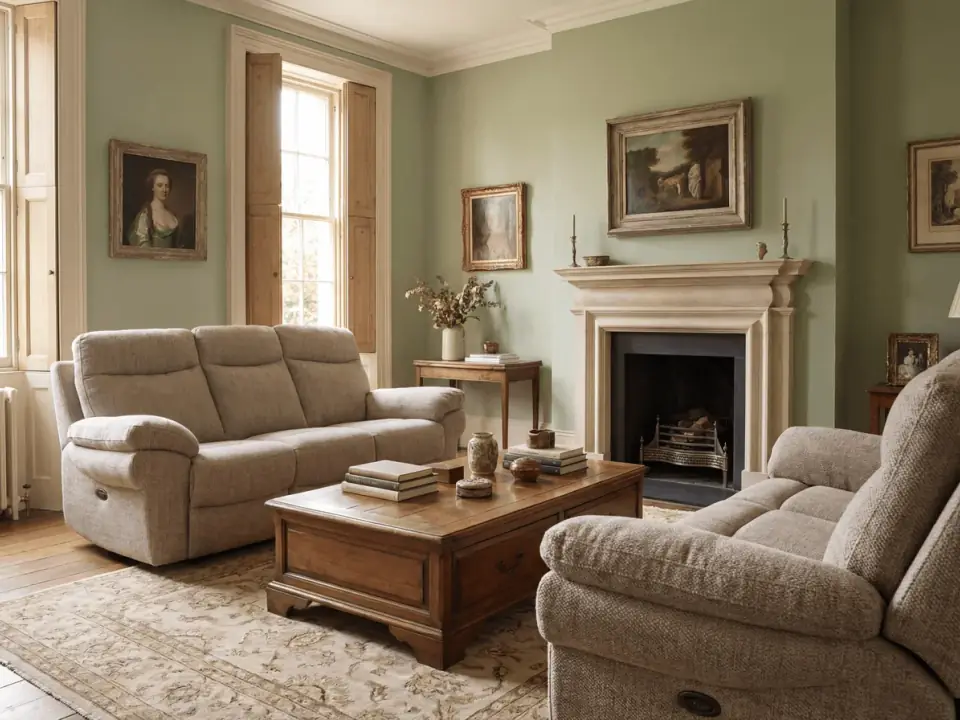
The Tanya Electric Recliner Set
£2,299
A 3-seater and 2-seater electric recliner set in soft brushed fabric. USB charging ports built into each seat, individually-controlled motors for headrest and footrest, and silent linear actuators. Sold as a matching set or split if you prefer.
The Tanya Electric Recliner Set pairs its powered recline mechanism with a hardwearing fabric chosen specifically for the demands of daily use. If comfort and durability are your twin priorities, it's worth a look. For more on electric recliner features and what to consider, see our electric recliner sofa guide.
Frequently Asked Questions#
What is the most durable sofa fabric?#
Full-grain leather is the most durable sofa covering overall, with a lifespan of 15-25 years when properly maintained. Among fabric options, tightly woven polyester and performance fabrics are the most durable, regularly achieving Martindale rub counts above 40,000 — meaning they'll withstand a decade or more of heavy daily use without visible wear.
Which sofa fabric is best for dogs?#
Microfibre and tightly woven polyester are the two best options for dog owners. Both resist staining, clean easily, and don't trap pet hair as readily as natural fibres. Avoid loose weaves and textured fabrics like chenille, which catch claws and embed fur. If your dog sheds heavily, choose a fabric colour that's close to your dog's coat colour — it sounds ridiculous, but it halves the visible hair problem overnight.
Is velvet a good choice for a family sofa?#
Modern polyester velvet is far more durable than most people expect — it handles 50,000+ Martindale rubs and resists staining well. However, it's not ideal for households with cats (claw snags are inevitable) or very young children who climb on furniture in shoes. For an adults-only or older-children household that wants a premium look, polyester velvet is genuinely practical.
How can I tell if a sofa fabric is good quality?#
Ask the retailer for three figures: the Martindale rub count (25,000+ for daily use), the pilling resistance rating (4-5 out of 5), and the light fastness rating (5+ out of 8 for rooms with natural light). If a retailer can't provide these numbers, the fabric hasn't been properly tested. Also request a sample and sit on it, spill water on it, and leave it in sunlight for a week before committing.
What's the difference between polyester and microfibre for sofas?#
Microfibre is a type of polyester, but made with extremely fine fibres that create a suede-like texture. Standard woven polyester looks and feels more like a traditional fabric weave. Both are durable and easy to clean. Polyester offers more visual variety and a more premium look; microfibre offers superior stain resistance and a softer hand-feel. For most households, either works well — it's largely an aesthetic preference.
Should I choose a patterned or plain fabric?#
From a practical standpoint, patterns and textured weaves hide stains, wear, and pet hair better than solid colours. A flecked, marled, or subtly patterned fabric in a mid-tone shade is the most forgiving option for a family sofa. Plain fabrics in very light or very dark colours show everything — dust on dark, stains on light. That said, if you love the look of a plain fabric and are happy to maintain it, there's no reason not to choose one. Just be realistic about the upkeep.